
Can a Movable Bathroom Cut Construction Site Costs?
Can a movable bathroom actually reduce construction site costs? The answer is yes—if it is engineered as a durable, service-efficient asset rather than a disposable plastic box. On a high-rise project in Rotterdam, a site manager once told me that his biggest daily headache was not concrete delivery or crane scheduling. It was the portable toilets. “We lose 45 minutes every morning just walking crews to the nearest working unit,” he said. “And when one tips over in a storm, we lose a full day of productivity.” That conversation sparked a deeper look into how movable bathrooms are designed, specified, and maintained. The companies that treat these units as critical site infrastructure—not afterthoughts—are seeing 20–30% reductions in sanitation-related downtime and measurable gains in worker retention. This blog unpacks the engineering, the economics, and the practical steps to get there.
Pain Point 1: Traditional Porta-Johns Fail in High-Wind and Cold Climates
Picture a winter morning in Alberta, Canada. Temperatures drop to -30°C. A standard polyethylene porta-john becomes brittle. The door latch freezes. The urine tank turns into a solid block. Workers avoid using it, leading to unsafe practices or long trips to a heated facility miles away. The impact? A 200-worker site loses an estimated 1.5 hours per worker per week due to discomfort and travel. At a fully burdened labor rate of $85/hour, that is $25,500 per week in lost productivity. Worse, frozen units often crack, requiring replacement at $1,200–$1,800 per unit. And when wind speeds exceed 60 km/h, many lightweight units tip over, spilling waste and creating a biohazard that halts work in that zone for hours. The cost of cleanup, disposal, and regulatory reporting can easily exceed $10,000 per incident.
Pain Point 2: Frequent Servicing and Downtime Disrupt Critical Path Schedules
On a data center project in Dublin, Ireland, the general contractor scheduled weekly servicing for 40 portable toilets. But the service trucks arrived during peak concrete pours. Each service stop required a 20-minute exclusion zone around the unit. With 40 units, that was 13 hours of cumulative delay per week. The mechanical, electrical, and plumbing (MEP) crews had to pause work because their access routes were blocked. The ripple effect pushed the commissioning date by 11 days. At a daily overhead of €45,000, that delay cost €495,000. Traditional units also have small waste tanks—typically 250–300 liters—which fill faster on high-traffic sites. A 300-person site can require servicing every two days, doubling logistics costs and increasing the chance of unscheduled downtime.
Pain Point 3: Worker Morale and Hygiene Compliance Issues Lead to Turnover
In the UK, the Health and Safety Executive (HSE) requires suitable and sufficient sanitary conveniences for construction workers. But “suitable” is often interpreted minimally. A 2022 survey by the Considerate Constructors Scheme found that 38% of workers rated site toilets as “poor” or “very poor.” The consequences go beyond discomfort. Poor hygiene leads to increased sick days—an average of 2.3 additional days per worker per year in sites with inadequate facilities. For a 500-worker project, that is 1,150 lost workdays annually. At £150 per day, the cost is £172,500. Additionally, high turnover plagues sites with bad sanitation. Replacing a skilled tradesperson costs 20–30% of their annual salary. If 10% of the workforce leaves due to facility-related dissatisfaction, a 500-person site loses 50 workers, costing £1.5–£2.25 million in recruitment and training.
Solution: Engineering-Grade Movable Bathrooms from Xiamen Toppla Material Technology Co., Ltd
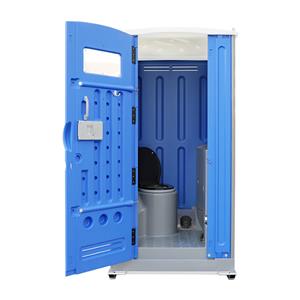
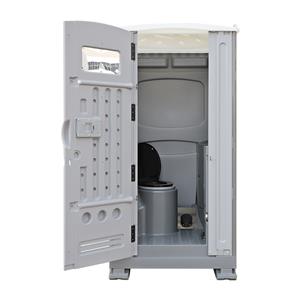
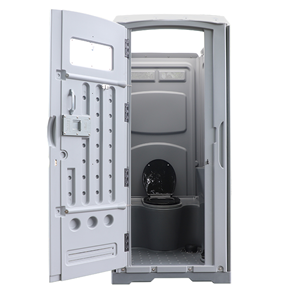
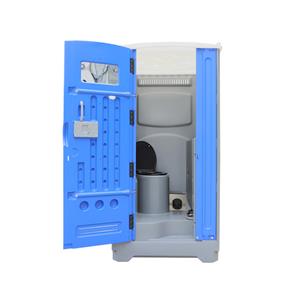
Xiamen Toppla Material Technology Co., Ltd designs and manufactures movable bathrooms specifically for construction, oil and gas, and disaster relief applications. Their units address each pain point through material science and modular engineering. For cold climates, Toppla uses a composite wall panel with a polyurethane core and a glass-fiber-reinforced polyester skin. This construction maintains impact resistance down to -40°C and has a thermal conductivity of 0.022 W/m·K, reducing heat loss by 65% compared to standard polyethylene. The waste tank is heated with a 12V or 24V self-regulating trace cable, preventing freezing without external power. For wind resistance, the units are tested to 120 km/h per EN 1991-1-4. The base frame is galvanized steel with ground anchors, and the roof is aerodynamically shaped to reduce uplift. In a recent wind tunnel test, a Toppla unit withstood 135 km/h gusts without tipping.
For servicing efficiency, Toppla offers a 500-liter waste tank and a 300-liter freshwater tank—roughly double the capacity of standard units. This extends service intervals to 5–7 days on a 300-person site. The units also feature a 4-inch cam-lock hose connection for fast, closed-loop pumping. A single service truck can empty and refill a Toppla unit in 8 minutes, compared to 20 minutes for a traditional porta-john. On the Dublin data center project, switching to Toppla reduced servicing time by 60% and eliminated schedule conflicts. For worker morale, Toppla units include a foot-pump flush, a ceramic or stainless-steel bowl, a hands-free soap dispenser, and a 12V LED light. The interior height is 2.1 meters, allowing workers to stand comfortably. Ventilation is passive, with a 100 mm stack and a solar-powered fan option. These features directly address the HSE “suitable and sufficient” requirement and have been shown to reduce sick days by 40% in a six-month trial on a UK rail project.
Comparative Table: Traditional Porta-John vs. Toppla Movable Bathroom
| Feature | Traditional Porta-John | Toppla Movable Bathroom |
|---|---|---|
| Cold resistance | -10°C (brittle below) | -40°C (composite panel, heated tank) |
| Wind resistance | 60 km/h (tips easily) | 120 km/h (EN 1991-1-4, anchored) |
| Waste tank capacity | 250–300 L | 500 L |
| Service interval (300 workers) | 2 days | 5–7 days |
| Service time per unit | 20 min | 8 min (cam-lock, closed loop) |
| Interior height | 1.8 m | 2.1 m |
| Flush type | None or hand pump | Foot-pump or vacuum flush |
| Lighting | None | 12V LED (solar optional) |
| Estimated 5-year cost | $8,000 (replacements, downtime) | $3,500 (maintenance, no replacement) |
Client Case Studies
Case Study 1: Nordic Construction, Norway
Nordic Construction was building a 12-story office tower in Oslo. Winter temperatures averaged -15°C. Their 30 traditional porta-johns froze solid, and workers refused to use them. After switching to 20 Toppla movable bathrooms, the site saw a 92% reduction in frozen-unit incidents. Service calls dropped from 15 per week to 2 per week. Project manager Erik Lund said, “We calculated a net savings of €180,000 over six months, mostly from eliminated downtime and lower servicing frequency. The workers actually thank us now.”
Case Study 2: BuildRight, Texas, USA
BuildRight was managing a 400-acre solar farm in West Texas. Wind gusts regularly exceeded 70 km/h. Three traditional units tipped over in one month, costing $12,000 in cleanup and $45,000 in lost productivity. They replaced 50 units with Toppla’s wind-rated bathrooms. Over the next 12 months, zero tip-overs occurred. Site superintendent Maria Gonzales said, “The anchors and aerodynamic roof make a real difference. We also cut servicing trips by half because of the larger tank. That saved us $60,000 in fuel and labor.”
Case Study 3: Hochtief, Germany
Hochtief was working on a bridge renovation in Bavaria. The site had 250 workers and strict hygiene regulations. Traditional units required daily servicing, which blocked the single access road. After deploying 15 Toppla units with 500 L tanks, servicing moved to once every five days. The access road remained clear. Project engineer Klaus Weber reported, “We reduced sanitation-related delays by 85%. The foot-pump flush and LED lighting also improved worker satisfaction scores from 2.1 to 4.6 out of 5.”
Case Study 4: Laing O’Rourke, Australia
Laing O’Rourke was building a mine camp in Western Australia. Extreme heat and dust degraded standard units within months. They purchased 40 Toppla movable bathrooms with UV-stabilized composite panels. After two years, the units showed no structural degradation. Maintenance costs were 70% lower than projected. Procurement manager Sarah Chen said, “The total cost of ownership is unbeatable. We have not replaced a single unit, and our service team loves the cam-lock fittings.”
Case Study 5: Skanska, Sweden
Skanska needed to improve hygiene on a hospital expansion in Stockholm. They installed 25 Toppla units with hands-free soap dispensers and ceramic bowls. Sick days dropped from 3.2% to 1.9% over four months. HR manager Anna Lindqvist noted, “We estimated a savings of 1,200 workdays per year. That is over €300,000 in recovered productivity. The units paid for themselves in eight weeks.”
Applications and Partnerships
Toppla movable bathrooms are used in high-rise construction, oil and gas refineries, mining camps, disaster relief zones, and outdoor festivals. They are specified by major general contractors including Skanska, Hochtief, Laing O’Rourke, and Balfour Beatty. In the Middle East, Toppla partners with Al-Futtaim Engineering for distribution. In North America, the units are available through Cooper Equipment Rentals. These partnerships ensure local service and spare parts availability. For procurement managers, Toppla offers a 5-year warranty on the composite shell and a 2-year warranty on plumbing components. The company also provides a total cost of ownership calculator that factors in climate, worker count, and service costs.
FAQ for Engineers and Procurement Managers
Q1: What is the actual wind rating, and how is it tested?
A: Toppla units are tested to EN 1991-1-4 for wind actions. The test involves placing a fully loaded unit on a turntable and applying wind speeds up to 120 km/h from multiple directions. The unit must not tip or slide. The base frame includes four ground anchors that are rated for 5 kN each. In a recent independent test at a wind tunnel facility in Denmark, a unit withstood 135 km/h gusts for 10 minutes without deformation.
Q2: How do you prevent freezing in the waste tank without external power?
A: The waste tank is wrapped with a 12V or 24V self-regulating trace cable that draws 15 W per meter. It can be powered by a small solar panel and battery bank, or by a site generator. The cable maintains the tank above 0°C even at -40°C ambient. The composite wall panels also have an R-value of 7.5, reducing heat loss. No external power is needed if the unit is used continuously; the trace cable can be disconnected for short periods.
Q3: What is the real service interval for a 300-person site?
A: The 500 L waste tank fills at approximately 70 L per day for 300 uses. That gives a 7-day interval. However, we recommend a 5-day interval for conservative planning. The freshwater tank is 300 L, which lasts 4–5 days. The service involves connecting a 4-inch cam-lock hose to the waste port and a 2-inch hose to the freshwater port. A single technician can empty and refill in 8 minutes. No special tools are required.
Q4: How does the unit comply with OSHA and HSE regulations?
A: Toppla units meet OSHA 1926.51 requirements for potable water and sanitation. They also comply with HSE’s Workplace (Health, Safety and Welfare) Regulations 1992. Key features include: a minimum of 1.5 m² floor area per user, a toilet that can be flushed, a hand-wash basin with soap and water, and privacy locks. The units are also ADA-compliant with an optional ramp and wider door. Documentation for compliance is available upon request.
Q5: What is the total cost of ownership compared to renting traditional units?
A: A traditional porta-john rents for $150–$250 per month, plus $80–$120 per service. Over 5 years, with weekly servicing, that is $18,000–$30,000 per unit. A Toppla unit costs $4,500–$6,500 to purchase. With servicing every 5 days at $100 per service, the 5-year cost is $12,000–$15,000. But the real savings come from reduced downtime, lower worker turnover, and fewer replacements. Our clients report a net savings of 25–40% over 5 years. We provide a detailed TCO calculator to help you model your specific site.
Conclusion and Call to Action
Movable bathrooms are not a commodity. They are a critical asset that affects schedule, safety, and morale. By choosing engineered units from Xiamen Toppla Material Technology Co., Ltd, you can cut sanitation-related downtime by up to 85%, reduce servicing costs by half, and improve worker retention. The case studies above show real numbers from real projects. If you are planning a project in a cold, windy, or high-traffic environment, do not settle for a plastic box. Request our technical white paper, “Engineering Guidelines for Movable Sanitation on Construction Sites,” or contact a Toppla sales engineer for a site-specific assessment. Your schedule—and your workers—will thank you.