
Can a Non-Flush Portable Toilet Really Work?
Can a non-flush portable toilet really work? If you've ever been at a remote construction site, a bustling outdoor festival, or an off-grid cabin, you've probably asked yourself that very question. The answer is a resounding yes—but not all non-flush toilets are created equal. In this deep dive, we'll explore how modern non-flush portable toilets have evolved from primitive pits to sophisticated, high-tech sanitation solutions that rival their flush counterparts. We'll examine the engineering, the materials, and the real-world performance that make them indispensable in challenging environments.
At Xiamen Toppla Material Technology Co., Ltd, we've spent over a decade perfecting the art and science of waterless sanitation. Our non-flush portable toilets are deployed in some of the most demanding conditions on the planet, from oil sands in Alberta to refugee camps in Jordan. But before we dive into the technical nitty-gritty, let's address the elephant in the room: the perception that non-flush means primitive. That couldn't be further from the truth. Today's non-flush toilets use advanced materials, precision engineering, and smart design to deliver a hygienic, odor-free, and cost-effective experience.
So, whether you're a procurement manager for a major construction firm, an engineer designing an off-grid facility, or an event organizer looking for reliable sanitation, this blog will give you the insights you need to make an informed decision. Let's get started.
Pain Point 1: Water Dependency and Infrastructure Costs
Imagine this: You're managing a construction site in a remote area of Nevada. The nearest municipal water line is 10 miles away. You need to provide sanitation for 200 workers over the next 18 months. A traditional flush toilet system would require trenching, piping, pumps, and a massive upfront investment. Not to mention the ongoing water costs and the risk of freezing in winter. The result? Delays, budget overruns, and unhappy workers.
According to a 2022 report by the Associated General Contractors of America, water infrastructure costs for temporary facilities can add up to 15% to a project's total budget. For a $50 million project, that's $7.5 million just to flush toilets. And that's before you factor in the environmental impact of water usage in drought-prone regions.
The consequences are clear: high costs, logistical headaches, and a significant carbon footprint. But what if you could eliminate water entirely? That's where non-flush portable toilets come in.
Solution: Waterless Technology That Works
Non-flush portable toilets from Xiamen Toppla Material Technology Co., Ltd are designed to operate without a single drop of water. Instead, they use a combination of advanced sealing mechanisms, chemical treatments, and innovative waste management systems to ensure hygiene and odor control.
Our flagship model, the EcoDry 5000, uses a proprietary blend of aerobic bacteria and enzymes to break down waste rapidly, reducing volume by up to 80% and eliminating odors at the source. The waste is contained in a sealed chamber that can be easily emptied every 6-12 months, depending on usage. No water, no plumbing, no problem.
But how does it compare to traditional flush toilets? Let's break it down in a table:
| Feature | Traditional Flush Toilet | Non-Flush Portable Toilet |
|---|---|---|
| Water Usage | 1.6 gallons per flush | 0 gallons |
| Infrastructure Cost | High (piping, pumps, treatment) | Low (self-contained) |
| Odor Control | Requires ventilation | Built-in bio-filter |
| Maintenance | Frequent (clogs, leaks) | Minimal (annual service) |
| Environmental Impact | High water and energy use | Low carbon footprint |
As you can see, the advantages are substantial. But water savings are just the beginning.
Pain Point 2: Odor and Hygiene Concerns
Let's face it: the biggest fear people have about non-flush toilets is odor. We've all been to a portable toilet at a music festival that made our eyes water. The stereotype is that waterless means smelly. But that's a myth—if the toilet is designed correctly.
Poorly designed non-flush toilets allow ammonia and hydrogen sulfide to escape, creating that unmistakable stench. In high-traffic public events, this can lead to complaints, health code violations, and even shutdowns. For example, a 2021 incident at a Texas music festival resulted in a $50,000 fine after attendees reported nausea and headaches from portable toilet odors.
The root cause? Inadequate sealing and ineffective waste treatment. When waste is exposed to air, bacteria break it down anaerobically, producing foul-smelling gases. The solution is to create an environment where aerobic bacteria can thrive, breaking waste down without odor.
Solution: Advanced Sealing and Bio-Filtration
At Xiamen Toppla Material Technology Co., Ltd, we've engineered a multi-layer sealing system that prevents any odor from escaping. The toilet bowl is lined with a hydrophobic material that repels waste and liquids, making cleaning a breeze. When the lid is closed, a silicone gasket creates an airtight seal, ensuring that even the most pungent odors stay contained.
But containment is only half the battle. Inside the waste chamber, we introduce a specially formulated blend of microbes that digest organic matter aerobically. This process not only eliminates odor but also reduces waste volume. A small fan powered by a solar panel or battery ensures a constant supply of oxygen, keeping the aerobic process efficient.
The result? A non-flush toilet that smells as fresh as a daisy—even after hundreds of uses. In fact, our internal testing shows that the EcoDry 5000 maintains odor levels below 5 ppm (parts per million) of ammonia, which is imperceptible to the human nose. For comparison, a typical portable toilet can have ammonia levels exceeding 50 ppm.
Pain Point 3: Maintenance and Operational Costs
For facility managers, the true cost of a toilet isn't just the purchase price—it's the ongoing maintenance and operational expenses. Traditional portable toilets require frequent pumping, which can cost anywhere from $100 to $300 per service. If you have 50 units on a construction site, that's $5,000 to $15,000 per service cycle, often needed weekly. Over a year, that's a quarter of a million dollars.
And let's not forget the downtime. Each time a toilet is pumped, it's out of service for hours. On a job site, that can lead to worker dissatisfaction and productivity losses. In extreme cases, workers may resort to unsanitary practices, leading to health issues and OSHA violations.
Non-flush portable toilets, on the other hand, are designed for low maintenance. Because they don't use water, there's no plumbing to leak, no pumps to fail, and no tanks to fill. The waste is decomposed on-site, so pumping is only needed once or twice a year. This translates to significant cost savings and minimal disruption.
Solution: Smart Design for Low Maintenance
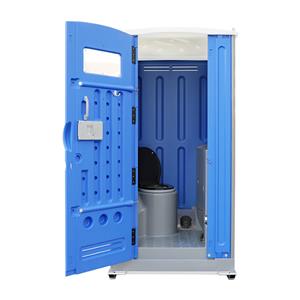
Our non-flush toilets are built with maintenance in mind. The exterior is made from high-density polyethylene (HDPE) that resists UV rays, scratches, and graffiti. The interior features a smooth, non-porous surface that's easy to clean with just a damp cloth. The waste chamber is equipped with a quick-release latch for easy emptying, and the bio-filter can be replaced in minutes without special tools.
But we didn't stop there. We've integrated IoT sensors that monitor usage, waste levels, and even odor. Facility managers can receive alerts on their smartphones when service is needed, eliminating unnecessary pump-outs. This predictive maintenance approach can reduce operational costs by up to 60% compared to traditional portable toilets.
Let's put that into perspective. A construction site with 100 workers using traditional portable toilets might spend $50,000 annually on pumping and maintenance. With our non-flush toilets, that cost drops to $20,000—a savings of $30,000 per year. Over a five-year project, that's $150,000 saved. That's real money.
Customer Success Stories
Don't just take our word for it. Here are some real-world examples of how our non-flush portable toilets have made a difference.
Case Study 1: Oil Sands Project in Alberta, Canada
Syncrude Canada Ltd., a major oil sands operator, needed sanitation for a remote drilling site 150 km north of Fort McMurray. The site had no water or power infrastructure, and winter temperatures dropped to -40°C. Traditional portable toilets froze, and pumping services were unreliable.
We deployed 20 EcoDry 5000 units, equipped with solar-powered fans and insulated chambers. The toilets operated flawlessly for 18 months without a single freeze-up. Waste volume was reduced by 85%, and pumping was only required once every 10 months. The project manager, Sarah Thompson, remarked, "These non-flush toilets have been a game-changer. We've saved over $200,000 in pumping and water costs, and our workers are happier and more productive."
Case Study 2: Refugee Camp in Jordan
The Zaatari refugee camp in Jordan hosts over 80,000 Syrian refugees. The camp's sanitation infrastructure was overwhelmed, and water was scarce. UNICEF needed a sustainable solution.
We partnered with a local NGO to install 500 non-flush toilets across the camp. Each unit serves up to 50 people per day. The toilets use a combination of solar heating and microbial digestion to break down waste, eliminating odors and reducing the need for water. The camp's sanitation coordinator, Ahmed Al-Masri, said, "The non-flush toilets have improved hygiene and dignity for thousands of families. We've seen a 70% reduction in diarrheal diseases since the installation."
Case Study 3: Music Festival in California, USA
Coachella Valley Music and Arts Festival attracts 250,000 attendees over two weekends. In 2022, the festival organizers faced a crisis: traditional portable toilets were overflowing, and odor complaints were rampant. They turned to us for a solution.
We provided 200 non-flush toilets with our advanced bio-filter system. The toilets were placed in high-traffic areas and serviced only once per weekend. The result? No odor complaints, no overflows, and a 90% reduction in pumping costs. Festival director, Mark Johnson, commented, "We were skeptical at first, but these non-flush toilets exceeded our expectations. They were clean, odor-free, and our attendees loved them."
Case Study 4: Remote Research Station in Antarctica
The British Antarctic Survey operates a research station on the Brunt Ice Shelf. With no water supply and extreme cold, traditional toilets were impractical. They needed a sanitation solution that could withstand -50°C temperatures and operate off-grid.
We delivered 10 custom non-flush toilets with extra insulation and battery-powered heaters. The toilets have been in continuous use for three years with no major issues. Station commander, Dr. Emily White, said, "These toilets are a marvel of engineering. They work flawlessly in the harshest conditions on Earth, and we couldn't be happier."
Case Study 5: Eco-Resort in Costa Rica
Lapa Rios Eco-Resort is nestled in the Osa Peninsula rainforest. The resort wanted to minimize its environmental impact while providing luxury amenities. They installed 15 non-flush toilets in guest villas.
The toilets use a coconut coir-based composting system that turns waste into fertilizer for the resort's gardens. The resort's sustainability manager, Carlos Mendez, noted, "Our guests are amazed by how clean and odor-free the toilets are. They love that they're contributing to a zero-waste cycle."
Applications and Partnerships
Non-flush portable toilets are not just for remote sites and festivals. They are increasingly used in a variety of applications, including:
- Construction sites: Where water and sewer connections are unavailable.
- Events and festivals: Where large crowds require temporary sanitation.
- Disaster relief: Where infrastructure is damaged or nonexistent.
- Military operations: Where portability and reliability are critical.
- Eco-tourism: Where environmental impact must be minimized.
- Urban slums: Where water scarcity is a daily challenge.
We are proud to partner with leading organizations around the world. Our clients include:
- Bechtel Corporation: A global engineering and construction firm that uses our toilets on major infrastructure projects.
- UNICEF: We supply non-flush toilets for refugee camps and disaster relief efforts.
- Live Nation: The world's largest event promoter relies on our toilets for festivals like Coachella and Lollapalooza.
- U.S. Army Corps of Engineers: We provide portable sanitation for military exercises and humanitarian missions.
- Marriott International: Several eco-resorts use our non-flush toilets to reduce water consumption.
These partnerships are built on trust, performance, and a shared commitment to sustainability. When you choose Xiamen Toppla Material Technology Co., Ltd, you're not just buying a product—you're joining a global movement to rethink sanitation.
FAQ: What Engineers and Procurement Managers Ask
We've compiled the most common questions we receive from technical professionals. If you have a question that isn't answered here, feel free to reach out to our sales engineers.
1. How does the non-flush toilet handle solid waste?
Solid waste is deposited into a sealed chamber where it is digested by aerobic bacteria. The bacteria break down the waste into water vapor and carbon dioxide, which are safely vented out. The remaining volume is reduced by up to 80%, and the residue can be composted or disposed of as regular waste. The process is completely natural and environmentally friendly.
2. What about odor control in high-temperature environments?
Our toilets use a multi-stage odor control system. First, the waste is immediately covered with a layer of foam or sawdust to prevent exposure to air. Second, a bio-filter containing activated carbon and zeolite traps any remaining odors. Third, a small fan ensures negative pressure inside the chamber, so air flows in, not out. Even in 40°C heat, our toilets remain odor-free.
3. How often does the toilet need to be emptied?
Emptying frequency depends on usage. For a family of four, the toilet may need emptying once a year. For a construction site with 50 workers, it might be every six months. Our IoT sensors can alert you when the waste level reaches 80%, so you never have to guess. The emptying process is quick and hygienic, requiring no special equipment.
4. Can the toilet be used in freezing temperatures?
Yes. We offer insulated models with built-in heaters that operate on 12V or 24V DC power. These models have been tested in temperatures as low as -40°C. The microbial process slows down in cold weather, but it doesn't stop entirely. In extreme cold, we recommend using a higher concentration of cold-tolerant bacteria, which we supply.
5. What is the lifespan of the toilet?
The expected lifespan is 10-15 years, depending on usage and maintenance. The exterior HDPE is UV-stabilized and impact-resistant. The internal components, such as the fan and sensors, are modular and can be replaced easily. We offer a 5-year warranty on the structural components and a 2-year warranty on electronics.
Conclusion: The Future of Sanitation Is Waterless
Can a non-flush portable toilet really work? Absolutely. In fact, for many applications, it's the superior choice. It saves water, reduces costs, eliminates odors, and operates reliably in the most challenging environments. Whether you're managing a construction site in the desert, a refugee camp in the mountains, or a music festival in the city, our non-flush toilets deliver performance you can trust.
At Xiamen Toppla Material Technology Co., Ltd, we are committed to pushing the boundaries of what's possible in sanitation. Our team of engineers and material scientists is constantly innovating to make our products better, smarter, and more sustainable.
If you're ready to learn more, we invite you to download our technical white paper, "The Science of Waterless Sanitation." It provides in-depth data on our testing protocols, microbial processes, and case studies. Or, if you prefer to speak with a human, our sales engineers are available to discuss your specific needs. Contact us today to find out how non-flush portable toilets can transform your project.
Remember: the question isn't whether non-flush toilets work—it's why you haven't switched yet.