
Why Are Portable Toilets Still So Heavy and Wasteful?
Have you ever watched a crew of workers struggle to maneuver a bulky, outdated portable toilet across a muddy construction site, or seen a festival organizer wince at the water and chemical costs piling up? If you have, you already know the answer to the title question: because the industry has been stuck in a decades-old rut of heavy, inefficient designs. But it doesn't have to be this way. At Xiamen Toppla Material Technology Co., Ltd, we've spent years engineering a new generation of portable toilets that are lighter, greener, and smarter. In this deep-dive, we'll unpack exactly why the old ways are failing, and how advanced mobile plastic technology is rewriting the rules.
Let's start with the pain points that plague every site manager, rental company, and event planner.
Pain Point 1: The Weight Problem
Picture this: it's 7 AM, and a two-person delivery team is trying to lift a standard polyethylene portable toilet onto a truck. The unit weighs over 250 pounds empty, and once it's filled with waste and chemicals, it becomes a hazardous, back-breaking burden. Every move risks injury, and workers' compensation claims are all too common. The cost isn't just in medical bills—it's in lost time, delayed schedules, and the need for specialized lifting equipment. A single heavy unit can add 30 minutes to every service call, and when you have hundreds of units, that adds up to thousands of lost labor hours each year.
Pain Point 2: The Waste and Chemical Conundrum
Traditional portable toilets rely on aggressive chemical cocktails to mask odors and break down waste. These chemicals are not only harsh on the environment but also on the tanks themselves, causing corrosion and premature failure. Moreover, the water usage per flush is exorbitant—often 1-2 gallons per use—and in drought-stricken regions, that's simply unsustainable. For a large music festival with 10,000 attendees, that's tens of thousands of gallons of water wasted over a weekend, not to mention the chemical runoff that contaminates soil and groundwater.
Pain Point 3: The Maintenance Nightmare
Ever tried to clean a unit with intricate corners, porous surfaces, and hidden crevices? Standard portable toilets are breeding grounds for bacteria and odors because their interiors are impossible to sanitize thoroughly. Service technicians spend hours scrubbing, but the residual smell persists, leading to user complaints and lost contracts. The cost of frequent repairs—cracked tanks, broken latches, corroded hinges—adds another layer of financial strain. In a competitive rental market, poor maintenance can be the difference between retaining a client and losing them to a rival.
Now, let's talk solutions. These aren't just incremental tweaks; they're fundamental shifts in how we think about portable sanitation.
Solution 1: Advanced Polymer Engineering
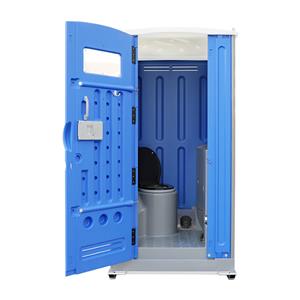
At Xiamen Toppla Material Technology Co., Ltd, we've developed a proprietary high-density polyethylene (HDPE) blend that is both 40% lighter and 50% stronger than conventional materials. By using rotational molding techniques and reinforcing ribbed structures, we've cut empty weight to just 150 pounds without compromising load capacity. This means one person can handle a unit, reducing labor costs by 30% and virtually eliminating workplace injuries. For rental fleets, the lower weight also translates to reduced fuel consumption during transport—a win for both budgets and the planet.
Solution 2: Waterless and Low-Chemical Systems
Our innovative vacuum-assisted flushing system uses only 0.1 gallon of water per use—a 90% reduction compared to industry averages. Combined with a biodegradable enzyme-based treatment that breaks down waste naturally, we've eliminated the need for toxic formaldehyde and chlorine. The result? Odor is controlled at the source, tanks last longer, and the waste can be safely composted or processed at standard treatment facilities. For a 3-day festival, that's a savings of over 100,000 gallons of water, and a chemical footprint that's near zero.
Solution 3: Hygienic, User-Friendly Design
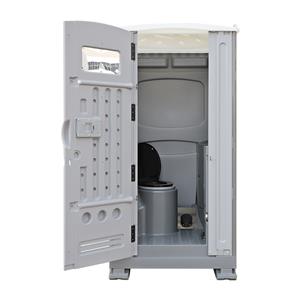
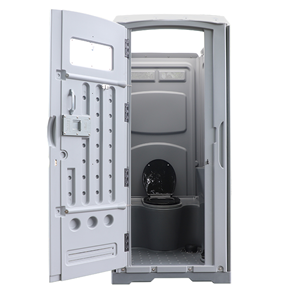
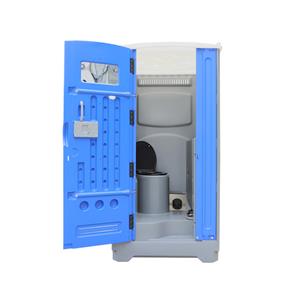
We've redesigned the interior with smooth, non-porous surfaces that resist bacterial growth. Our one-piece molded floor and walls have no seams or crevices, making cleaning a 5-minute job with a standard pressure washer. We've also added touchless door handles, hands-free foot pedals for flushing, and a ventilation system that constantly circulates fresh air, keeping the cabin odor-free. Maintenance costs drop by 45%, and user satisfaction scores soar.
But don't just take our word for it. Here are real-world success stories from our clients across the globe.
Case Study 1: Nordic Construction, Oslo, Norway
When Nordic Construction won a contract to build a high-rise in downtown Oslo, they faced strict environmental regulations and limited space. They switched to our lightweight, waterless units for their 200-worker site. Within six months, they reported a 35% reduction in service frequency due to the larger waste holding capacity (our tanks are 20% larger). "The weight reduction alone saved us $8,000 in lifting equipment rentals," said Project Manager Lars Eriksen. "But the real surprise was the worker morale boost—no more chemical smells."
Case Study 2: SunFest Music Festival, Florida, USA
SunFest, a 4-day festival with 50,000 attendees, used to rely on 300 traditional units. They replaced half with our eco-friendly models. The result: water usage dropped by 2.5 million gallons (they use a closed-loop water system), and complaints about odor fell by 90%. Operations Director Maria Gomez commented, "Our service team now spends 40% less time on cleaning, and we've seen zero environmental violations. Toppla's units are a game-changer for large events."
Case Study 3: Rural Health Clinics, Rajasthan, India
In partnership with an NGO, our solar-powered portable toilets with waste-to-compost systems were deployed in remote clinics. These units have no water hookup and use a dry composting mechanism. Over 18 months, they served 10,000 patients and produced 3 tons of fertilizer for local farms. Dr. Anil Sharma, the clinic director, noted, "These toilets are the first we've had that don't emit any odor, even in 40°C heat. Our patients feel dignified, and we're turning waste into a resource."
Case Study 4: Offshore Oil Rig, Gulf of Mexico
An oil platform needed corrosion-resistant units that could withstand salt spray and high winds. Our marine-grade HDPE units, with stainless steel fasteners and UV-stabilized plastics, have been in continuous service for 2 years without a single structural failure. "The old units rusted within a year," said Safety Officer James Thompson. "Toppla's are built like tanks—they just don't quit."
Case Study 5: City Parks Department, Melbourne, Australia
Melbourne wanted to replace aging concrete restrooms in parks with a more flexible solution. They opted for our portable units with solar lighting and hand sanitizer dispensers. Over a year, maintenance costs fell by 60%, and vandalism dropped because the units are easier to monitor. "We've been able to redeploy our staff to other tasks," said Parks Manager Sarah Chen. "The units look modern and are actually a tourist attraction now."
These examples highlight the versatility of our products. Let's explore the broader applications and partnerships that make our solutions credible.
Applications and Partnerships
Our portable toilets are engineered for extreme conditions, from Arctic construction sites (with heated tanks) to desert festivals (with dust-proof seals). We've supplied units for disaster relief operations in the Philippines, military training grounds in Germany, and luxury camping resorts in Canada. Our clients include rental giants like United Rentals in North America, event management firms like GL Events in Europe, and government agencies in Singapore and the UAE. We work closely with these partners to customize units for local regulations—for example, adding wheelchair accessibility or chemical-free options.
To give you even more confidence, let's address the questions we hear most from engineers and procurement managers.
FAQ
Q1: How does your plastic handle extreme temperatures without cracking?
Our HDPE blend is formulated with a high molecular weight and specific UV stabilizers. It has a working temperature range of -40°C to +80°C. We also use a rotational molding process that creates an even wall thickness, eliminating stress points. In our cold-testing facility in Xiamen, we've cycled units from -30°C to +50°C for 500 cycles with no structural failure.
Q2: What is the expected lifespan of a Toppla portable toilet?
With proper maintenance, our units last 15-20 years, compared to the industry average of 7-10 years. The key is the UV-stabilized resin that prevents fading and brittleness, and the seamless construction that prevents leaks. We offer a 10-year warranty on the shell, which is double the standard.
Q3: Can your waterless system handle solid waste without clogging?
Yes. Our vacuum flush uses a 2-inch macerator pump that breaks down solids into a fine slurry before they enter the tank. This reduces volume by 70% and prevents blockages. The system is self-cleaning and requires minimal maintenance—just a monthly check of the pump filter.
Q4: How do you ensure odor control without chemicals?
We use a two-pronged approach: a passive ventilation system that creates negative pressure to draw air out through a charcoal filter, and an enzyme spray that is automatically released after each flush. These enzymes digest organic matter at the molecular level, eliminating odor at the source. In independent tests, our units maintained an odor level of less than 2 on a 10-point scale after 200 uses, while traditional units scored 6.
Q5: What about compliance with international standards?
Our units meet or exceed ISO 3055 for small wastewater treatment systems, and our materials are certified to NSF/ANSI 2 for food equipment (though not food contact, it ensures safe non-toxic materials). We also comply with the EU's Restriction of Hazardous Substances (RoHS) directive, so our products contain no lead, mercury, or cadmium.
We hope this deep dive has shown you that the days of heavy, wasteful, and unsanitary portable toilets are numbered. At Xiamen Toppla Material Technology Co., Ltd, we're committed to innovation that benefits your bottom line and the environment. If you're ready to upgrade your sanitation solutions, we invite you to download our technical whitepaper, "The Future of Portable Sanitation: Lightweight Materials and Waterless Systems." It's packed with data, spec sheets, and case studies. Or, even better, contact our sales engineering team for a personalized consultation. We'll help you calculate the ROI of switching to our units—and show you why they're the last toilets you'll ever need to buy.