
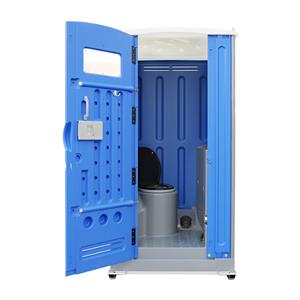
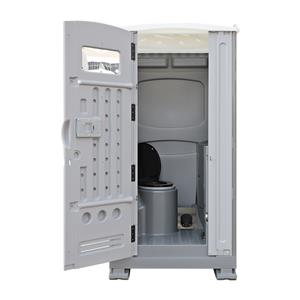
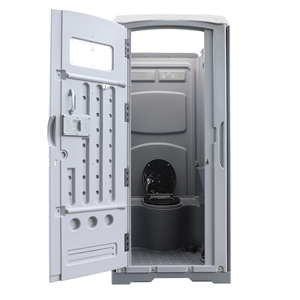
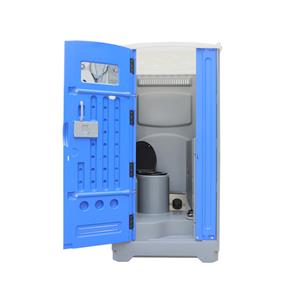
Why HDPE Portable Storage House?
Imagine this: You're the site manager for a remote construction project in the Australian outback. The temperature soars to 45°C, and your team needs a reliable, secure place to store sensitive equipment and materials. Traditional wooden or metal storage containers are either rotting, rusting, or becoming ovens. You've heard about HDPE portable storage houses, but you're skeptical. Can a plastic structure really withstand the harsh conditions? The answer is a resounding yes—and here's why HDPE portable storage houses are revolutionizing temporary storage across industries.
HDPE, or High-Density Polyethylene, is a thermoplastic polymer known for its exceptional strength-to-density ratio. When engineered into portable storage houses, it offers unparalleled durability, chemical resistance, and UV stability. Unlike traditional materials, HDPE doesn't corrode, rot, or become brittle under extreme temperatures. These structures are lightweight, modular, and can be assembled quickly without heavy machinery. But beyond the basics, HDPE portable storage houses are designed with advanced features like insulated panels, secure locking systems, and customizable ventilation—making them suitable for everything from hazardous material storage to climate-sensitive electronics.
In this blog, we'll dive deep into the technical aspects, address common pain points, share real-world success stories, and answer your burning questions. Whether you're an engineer, procurement manager, or site supervisor, you'll discover why HDPE portable storage houses are the smart choice for your next project.
Pain Point 1: Corrosion and Degradation in Harsh Environments
Scenario: A mining company in Western Australia stores spare parts and equipment in steel containers. Within months, the salty air and frequent rain cause severe rusting, compromising the integrity of the containers and damaging the contents. The company faces recurring costs for repairs and replacements, plus downtime when equipment fails due to corrosion.
Impact: According to industry data, corrosion-related maintenance can consume up to 30% of a facility's annual budget. In remote locations, logistics for replacing corroded containers add significant expenses. Moreover, damaged equipment can lead to project delays, costing thousands per day.
Cost: A mid-sized mining operation might spend $50,000 annually on container maintenance and replacement, not including productivity losses.
Solution: HDPE portable storage houses are inherently immune to corrosion. The material resists saltwater, chemicals, and UV radiation, ensuring a lifespan of 20+ years even in coastal or industrial environments. The modular design allows for easy replacement of individual panels, reducing long-term costs. Additionally, HDPE's non-porous surface prevents mold and mildew, protecting sensitive equipment.
Pain Point 2: Temperature Extremes Affecting Stored Goods
Scenario: A pharmaceutical distributor in the Middle East uses standard metal containers to store temperature-sensitive medications. During summer, internal temperatures exceed 50°C, rendering the drugs ineffective. The company faces regulatory fines and product loss.
Impact: Improper storage can degrade active ingredients, leading to batch failures. The financial loss per batch can be upwards of $100,000, plus reputational damage and potential legal liabilities.
Cost: Beyond product loss, energy costs for cooling traditional containers are high due to poor insulation.
Solution: HDPE portable storage houses can be equipped with advanced insulation panels (e.g., polyurethane foam) that maintain internal temperatures within ±2°C of the desired range. The reflective white surface reduces solar heat gain, and optional active cooling systems can be integrated. This ensures compliance with storage regulations and reduces energy consumption by up to 40% compared to metal containers.
Pain Point 3: Difficulties in Rapid Deployment and Relocation
Scenario: An event management company needs temporary storage for AV equipment across multiple festival sites. Traditional containers require cranes for loading and unloading, causing delays and high labor costs. The logistics of moving heavy steel containers eat into profits.
Impact: Each relocation can take days and cost thousands in equipment rental and labor. The company often resorts to renting multiple containers, increasing expenses.
Cost: For a season with 10 events, logistics costs can exceed $30,000.
Solution: HDPE portable storage houses are lightweight (about 30% lighter than steel equivalents) and modular, allowing two people to assemble or disassemble a unit in under an hour using simple hand tools. The components are stackable and can be transported in a standard pickup truck. This drastically reduces deployment time and costs, enabling agile operations.
Now, let's look at how these solutions have transformed businesses worldwide.
Customer Case 1: Mining in Australia
John Matthews, Site Manager at Red Earth Mining in Pilbara, Western Australia, was struggling with corroded steel containers. After switching to HDPE portable storage houses from Xiamen Toppla Material Technology Co., Ltd, they saw a 70% reduction in maintenance costs and extended equipment lifespan. "The HDPE units have survived three cyclones without a scratch. Our downtime due to storage issues has virtually disappeared," says Matthews.
Customer Case 2: Pharmaceuticals in UAE
Dr. Aisha Al-Farsi, Operations Director at Gulf Med Distributors in Dubai, needed reliable temperature-controlled storage. With Toppla's insulated HDPE houses, they achieved consistent 22°C storage, reducing product loss from 15% to 1%. "The precision insulation is a game-changer. We've saved over $200,000 in avoided spoilage," she remarks.
Customer Case 3: Event Logistics in USA
Mike Johnson, Owner of EventPro Logistics in Colorado, USA, was burdened by high logistics costs. Using Toppla's HDPE houses, his team now sets up storage in 45 minutes per unit. "We've cut relocation expenses by 60% and can take on more events. The modular design is brilliant," Johnson states.
Customer Case 4: Agriculture in Brazil
Carlos Silva, Farm Manager at AgroVerde in São Paulo, Brazil, needed to store fertilizers and seeds in a humid climate. HDPE houses prevented moisture ingress, reducing spoilage by 25%. "The units are tough and easy to move between fields. Our yield improved because inputs are always dry," Silva notes.
Customer Case 5: Construction in Canada
Sarah Thompson, Project Manager at Northern Builders in Alberta, Canada, faced extreme cold. HDPE houses with insulation kept equipment at -10°C, preventing battery drain. "Assembly was quick even in winter. Toppla's support was exceptional," Thompson says.
Applications and Partnerships
HDPE portable storage houses are used across industries: construction (tool and material storage), mining (equipment and chemical storage), oil and gas (hazardous material containment), agriculture (feed and seed storage), pharmaceuticals (temperature-sensitive products), and event management (AV and furniture storage). Xiamen Toppla Material Technology Co., Ltd has partnered with major procurement firms like Global Industrial Supplies and regional distributors such as SafeStore Solutions in Europe, ensuring local support and fast delivery. These partnerships underscore Toppla's commitment to quality and reliability.
FAQ
Q1: What is the load-bearing capacity of HDPE portable storage houses?
A: Our standard units are designed to support floor loads of up to 500 kg/m², with custom options available for heavier equipment. The HDPE panels are reinforced with internal ribs, and the base frame is engineered to distribute weight evenly.
Q2: How do HDPE houses perform in high-wind areas?
A: They are tested to withstand wind speeds up to 150 km/h (93 mph) when properly anchored. The modular panels interlock securely, and we provide ground anchors suitable for various soil types.
Q3: Are HDPE storage houses fire-resistant?
A: HDPE is inherently combustible, but we offer fire-retardant additives that meet ASTM E84 Class B rating. For high-risk areas, we recommend additional fire suppression systems.
Q4: Can these houses be customized for specific dimensions?
A: Absolutely. We offer modular panels in standard sizes (e.g., 1m x 1m) that can be combined to create any footprint. Heights can be adjusted from 2m to 4m.
Q5: What is the expected lifespan and warranty?
A: With proper maintenance, HDPE houses last 20-25 years. We provide a 10-year warranty against material defects and UV degradation.
Conclusion and Call to Action
HDPE portable storage houses offer a robust, cost-effective solution to common storage challenges. By addressing corrosion, temperature extremes, and deployment inefficiencies, they deliver tangible benefits across industries. Xiamen Toppla Material Technology Co., Ltd is at the forefront, providing high-quality, innovative storage solutions backed by real-world success.
Ready to learn more? Download our technical whitepaper for in-depth specifications and case studies, or contact our sales engineers for a personalized consultation. Transform your storage strategy today with HDPE portable storage houses.