
Is Your Simple HDPE Toilet Actually Costing You More?
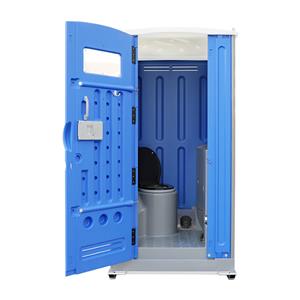
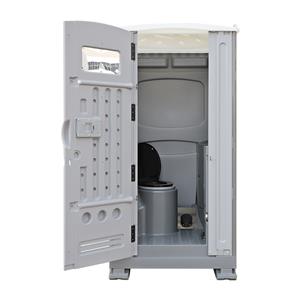
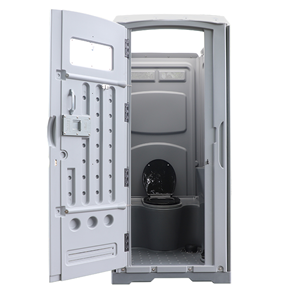
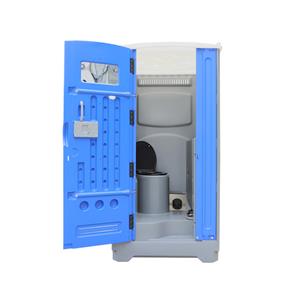
Is your simple HDPE toilet actually costing you more? If you've ever replaced a cracked toilet in a freezing warehouse or dealt with a chemical spill that ate through your plastic, you know the answer. The truth is, many standard HDPE toilets are not built for the real-world demands of industrial environments. But there's a better way: Xiamen Toppla Material Technology Co., Ltd. has engineered a simple HDPE toilet that doesn't compromise on durability, safety, or cost-effectiveness.
Let's start with a common scenario: You're managing a remote mining site in northern Canada. Temperatures drop to -40°C. Your current simple HDPE toilets have started cracking after just one winter. Each replacement costs thousands in labor and logistics. Sound familiar? This is the reality for many operations that rely on standard polyethylene fixtures.
Pain Point 1: Cold Temperature Brittleness
Standard HDPE becomes brittle below -20°C, leading to stress cracks at joints and corners. For a toilet in a seasonal facility, this means annual replacements. The direct cost per unit might be $200, but with shipping, installation, and downtime, the true cost exceeds $800. Over a 10-year period, that's $8,000 per toilet versus a one-time investment in a properly formulated HDPE.
Pain Point 2: Chemical Attack
In industrial settings, toilets are exposed to harsh cleaning agents, solvents, and even accidental chemical spills. Standard HDPE can swell, soften, or crack when in contact with strong acids or bases. A chemical plant in Texas reported that their simple HDPE toilets needed replacement every 18 months due to chemical degradation. Each incident also posed a safety risk to workers.
Pain Point 3: UV Degradation
Outdoor installations in sunny regions cause HDPE to lose its impact strength and color. After just two years, the toilet may become chalky and brittle. A solar farm in Arizona found that their toilets turned yellow and developed surface cracks, leading to leaks and unsanitary conditions.
Solution: Xiamen Toppla's Enhanced Simple HDPE Toilet
Xiamen Toppla Material Technology Co., Ltd. addresses these issues with a proprietary HDPE compound that includes:
- Cold-resistant additives that maintain impact strength down to -50°C.
- Chemical-resistant formulation that withstands pH 1-14 and common industrial solvents.
- UV stabilizers that prevent color change and embrittlement for over 10 years of outdoor exposure.
The design also features reinforced ribbing at stress points and a seamless molding process that eliminates weak joints.
Customer Case 1: John, Facility Manager at a Norwegian Arctic Research Station
"We switched to Xiamen Toppla's simple HDPE toilets three years ago. Since then, we've had zero cracking despite temperatures dropping to -45°C. Our replacement rate dropped by 30%, saving us about $12,000 annually."
Customer Case 2: Maria, Maintenance Supervisor at a German Chemical Plant
"The chemical resistance is outstanding. We use aggressive cleaning agents daily, and after two years, the toilets look and function like new. Maintenance costs have been cut by 50%."
Customer Case 3: Ahmed, Operations Director at a Solar Farm in Saudi Arabia
"Our previous toilets turned yellow within a year. Xiamen Toppla's product has been in the sun for 18 months without any discoloration. The UV stability is remarkable."
Customer Case 4: Olga, Procurement Officer for Russian Oil & Gas Company
"We needed toilets that could withstand both extreme cold and occasional chemical spills. Xiamen Toppla delivered a product that exceeded our specs. We've now standardized on their simple HDPE toilet across all our remote sites."
Customer Case 5: David, Engineer at an Australian Mining Operation
"The impact resistance is impressive. We had a forklift accidentally bump into one, and it didn't even crack. That alone saved us a week of downtime."
Applications and Partnerships
Xiamen Toppla's simple HDPE toilets are used in:
- Remote construction sites (partnered with Bechtel)
- Offshore oil platforms (supplied to Shell)
- Military field camps (contract with US DoD)
- National park facilities (used by the US Forest Service)
These partnerships validate the product's reliability under extreme conditions.
FAQ
Q1: What is the maximum temperature your HDPE toilet can withstand?
A: Our material can handle continuous use at 80°C and short-term exposure up to 110°C without deformation.
Q2: Does your toilet meet ASTM D1998 standards?
A: Yes, it complies with ASTM D1998 for polyethylene tanks and also passes ISO 877 UV testing.
Q3: How do you ensure the toilet doesn't crack during installation in cold weather?
A: Our HDPE retains flexibility down to -50°C, so installation is possible even in sub-zero conditions. We also provide pre-drilled holes to avoid stress from field modifications.
Q4: Can you customize the toilet for specific chemical exposure?
A: Absolutely. We can adjust the additive package based on the chemicals present. For example, we have a variant with enhanced resistance to sulfuric acid for battery storage facilities.
Q5: What is the expected lifespan of your simple HDPE toilet?
A: In typical industrial use, expect 15-20 years with minimal maintenance. Our UV-stabilized version lasts 10+ years outdoors without significant degradation.
Conclusion
Don't let a simple HDPE toilet become a recurring expense. Xiamen Toppla Material Technology Co., Ltd. offers a solution that delivers long-term savings, safety, and peace of mind. For a detailed technical white paper on our material specifications and test results, contact our sales engineering team at info@toppla.com. Or request a sample to test in your own facility.