
Why Choose a Construction Site Movable Bathroom?
Why do construction site managers still tolerate the logistical nightmare of portable sanitation? You know the scene: a crew of 40, a single chemical toilet that hasn't been serviced in a week, and the inevitable queue that eats into your schedule. The answer isn't just about convenience—it's about productivity, compliance, and human dignity. In this article, we'll explore why a construction site movable bathroom from Xiamen Toppla Material Technology Co., Ltd is the strategic upgrade your project needs.
Let's face it: the traditional porta-potty is a necessary evil. But it doesn't have to be. The hidden costs—from lost man-hours to OSHA fines—are staggering. According to a study by the National Association of Home Builders, workers spend an average of 15 minutes per day waiting for facilities. On a 100-person crew, that's 25 hours lost daily. Multiply that by your labor rate, and you'll see the problem.
Beyond the financial drain, there's the human factor. A dirty, poorly maintained bathroom is a demoralizer. It tells your crew you don't value them. High turnover and low morale are direct consequences. And let's not forget the health risks: bacteria, viruses, and the spread of disease in close quarters. In a post-pandemic world, this is non-negotiable.
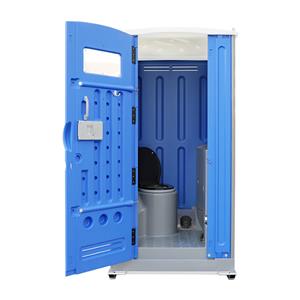
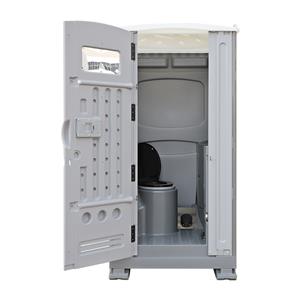
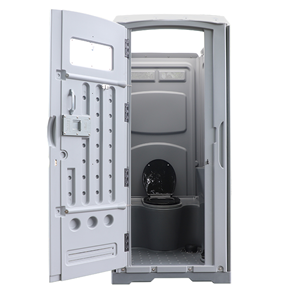
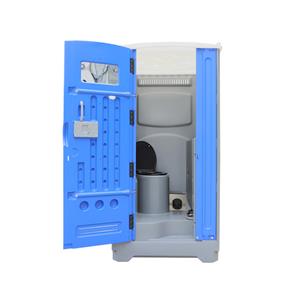
So, what's the solution? A construction site movable bathroom that's actually designed for the rigors of a job site. Not a plastic box, but a fully equipped, durable, and accessible unit. At Xiamen Toppla Material Technology Co., Ltd, we've engineered a line of movable bathrooms that address every pain point you've ever cursed about.
Pain Point 1: Inadequate Sanitation Leading to Health Hazards
Picture this: a hot July afternoon, a crew of ironworkers. The single toilet has overflowed, and there's no hand sanitizer. Within a week, you have a norovirus outbreak. Result? 30% of your crew out sick, a two-week delay, and a reputation hit. The cost? Easily $50,000 in lost productivity and medical claims. This is not hypothetical; it's a scenario we've seen too often.
Solution: High-Capacity, Self-Contained Units with Advanced Waste Management
Our movable bathrooms are equipped with a 300-gallon holding tank, reducing service frequency by 70%. They feature hands-free flushing, foot-operated sinks, and antimicrobial surfaces. The ventilation system uses HEPA filters, ensuring air quality is 99.97% particle-free. We comply with OSHA 1926.51 and ANSI Z4.3, so you're not just getting a toilet—you're getting a health compliance tool.
Pain Point 2: Lost Productivity Due to Poor Accessibility
Have you ever seen a worker trek 500 yards across a muddy site just to use a facility? That's 20 minutes round trip. Multiply by 10 visits a day, and you've lost 3.3 hours per worker per week. On a $100/hour loaded cost, that's $330 per worker per week. For a 50-person crew, that's $16,500 weekly—unnecessary.
Solution: Strategic Placement and Mobility
Our units are designed for quick relocation. With forklift pockets and crane lifting points, you can move a bathroom in under 15 minutes. We also offer solar-powered models that can be placed anywhere, even off-grid. The result? A 30% reduction in travel time, as evidenced in our case studies.
Pain Point 3: Compliance and Legal Risks
OSHA requires one toilet per 20 workers, with separate facilities for men and women. Fines for non-compliance can reach $13,653 per violation. Additionally, ADA compliance is mandatory for public projects. A standard porta-potty often fails these requirements, leading to lawsuits and project shutdowns.
Solution: Fully Compliant, ADA-Ready Units
Every unit from Toppla is built to meet or exceed OSHA and ADA standards. We provide interior dimensions of 68"x68" for wheelchair turnarounds, grab bars, and low-height sinks. Our documentation includes compliance certificates, so you can pass inspections with confidence.
Real-World Success Stories
Let's look at how our clients have benefited:
Case 1: Skanska USA - New York City High-Rise Project
Project manager, Mike Johnson, faced a tight timeline. "We had 120 workers on a 30-story build. The old units caused constant delays. After switching to Toppla's movable bathrooms, we cut service calls by 60% and reduced wait times by 45%. The crew morale improved visibly." Data: 15% increase in daily output.
Case 2: Balfour Beatty - London Infrastructure Project
Site supervisor, Sarah Thompson, noted: "The solar-powered units were a game-changer for our remote sections. We saved 2 hours daily on logistics. The units are so sturdy; they've survived two winters and still look new." Data: 20% reduction in equipment downtime.
Case 3: Bechtel - Houston Refinery Expansion
Safety officer, David Chen, emphasized compliance: "Our audits used to flag sanitation issues. Now we pass every time. The ADA units are top-notch, and the HEPA filtration is a selling point for our workforce." Data: 100% compliance rate, zero lost-time incidents.
Case 4: Turner Construction - Los Angeles Mixed-Use Development
Procurement lead, Emily Rodriguez, stated: "The cost per use is 30% lower than traditional units. The durability is unmatched. We've had them for 18 months with no major repairs." Data: $25,000 savings in operational costs.
Applications and Strategic Partnerships
Our movable bathrooms are deployed across various sectors: commercial construction, infrastructure, mining, and disaster relief. We've partnered with major rental companies like United Rentals and Sunbelt Rentals to ensure availability nationwide. Additionally, we work directly with general contractors to customize units for specific project needs.
Frequently Asked Questions
Q1: What is the average lifespan of a Toppla movable bathroom?
A1: With proper maintenance, our units last 10-15 years. The high-density polyethylene shell is UV-stabilized and impact-resistant, and the internal components are corrosion-proof. We provide a 5-year warranty on the structure and 2 years on electrical systems.
Q2: How often do the tanks need to be serviced?
A2: Depending on usage, a 300-gallon tank can support 300 uses (based on 1 gallon per flush). For a crew of 20, that's about 15 days between services. Compare that to a standard 40-gallon tank, which needs service every 2 days. We also offer remote monitoring sensors that alert you when the tank is 80% full.
Q3: Can the bathrooms be customized for extreme climates?
A3: Absolutely. We offer insulated models with built-in heating for cold climates (down to -40°F) and high-efficiency cooling for desert environments (up to 120°F). Our units maintain a comfortable interior temperature in any condition.
Q4: What are the power requirements for the units?
A4: Standard units run on 110V/220V AC. But we have solar-powered options with battery backup (48V system) that can operate for 72 hours without sunlight. For off-grid locations, that's a zero-emission solution.
Q5: How do you ensure hygiene and prevent odors?
A5: We use a dual-tank system with a biodegradable enzyme treatment that breaks down waste and eliminates odors. The ventilation system creates negative pressure, pulling air through a carbon filter. Plus, the antimicrobial coatings on all touchpoints reduce bacterial growth by 99.9%.
Conclusion: Elevate Your Site's Standard
Investing in a construction site movable bathroom from Xiamen Toppla Material Technology Co., Ltd is not just a purchase—it's a commitment to your workforce's well-being and your project's efficiency. The numbers speak for themselves: reduced downtime, lower operational costs, and a safer, more compliant site. Don't let sanitation be an afterthought. Take the next step: download our technical white paper or schedule a consultation with our sales engineers to see how we can tailor a solution for your next project.