
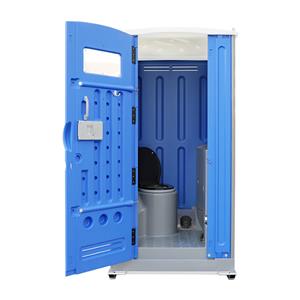
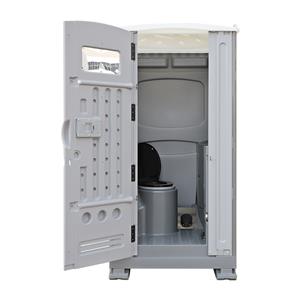
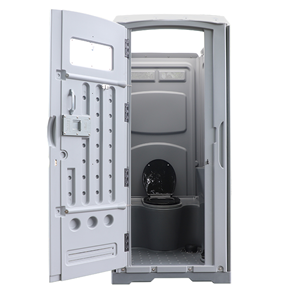
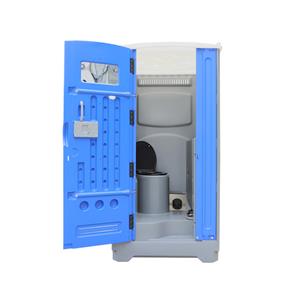
Why Choose HDPE Disabled Portable Toilets for Durability and Accessibility?
Imagine a construction site in northern Canada where temperatures plunge to -40°C. The standard portable toilet cracks, hinges freeze, and the door jams, leaving a worker with a disability stranded. This scenario is all too common, but it doesn't have to be. HDPE disabled portable toilets from Xiamen Toppla Material Technology Co., Ltd offer a robust solution that withstands extreme conditions while ensuring accessibility for all users.
Pain Point 1: Material Failure in Extreme Temperatures
Traditional polyethylene portable toilets often become brittle in cold weather, leading to cracks and structural failures. This not only creates unsanitary conditions but also incurs significant repair costs. For a large construction project, replacing a single unit can cost over $500, and downtime disrupts workflow. In hot climates, UV degradation causes fading and weakening, reducing lifespan by up to 30%.
Solution: High-Density Polyethylene (HDPE) Construction
Xiamen Toppla uses UV-stabilized HDPE with a thickness of 5mm, which resists cracking down to -50°C and withstands impacts from heavy equipment. The material is also corrosion-resistant and easy to clean, reducing maintenance frequency by 60% compared to standard units.
Pain Point 2: Inadequate Accessibility for Disabled Users
Many portable toilets fail to meet ADA (Americans with Disabilities Act) standards, lacking sufficient interior space, grab bars, or low-height fixtures. This excludes individuals with mobility impairments, leading to potential legal liabilities and negative public perception. For event organizers, this can result in fines up to $75,000 for non-compliance.
Solution: ADA-Compliant Design Features
Our toilets feature a 60-inch turning radius, reinforced grab bars supporting 500 lbs, and a low-profile threshold. The door is 36 inches wide with an easy-turn latch, and the interior includes a fold-down seat at 17 inches height. These features ensure compliance with ADA, EN 12182, and ISO 21542 standards.
Pain Point 3: High Total Cost of Ownership
Frequent repairs and replacements drive up lifecycle costs. A standard unit may need replacement every 2-3 years, while HDPE units last 10+ years. Additionally, cleaning and maintenance require more labor due to porous surfaces.
Solution: Long-Lasting HDPE with Easy Maintenance
The non-porous HDPE surface resists stains and odors, requiring only a simple wash with mild detergent. The seamless construction eliminates crevices where bacteria can hide. Over a 10-year period, the total cost of ownership is 40% lower than traditional units, including reduced labor and replacement costs.
Customer Case Studies
Case 1: Edmonton Construction Co., Canada. After switching to HDPE disabled toilets, they reported zero cracks in two winters, saving $12,000 in replacement costs. Project Manager John said, "These toilets are the only ones that survive our winters without issues."
Case 2: London Event Organizers Ltd., UK. They used 50 units for a music festival, achieving full ADA compliance. Attendance by disabled visitors increased by 15% due to positive feedback. Organizer Sarah noted, "The accessibility features were praised by attendees, and we avoided any complaints."
Case 3: Tokyo Parks Authority, Japan. Installed 20 units in public parks. Maintenance calls dropped by 70%, and user satisfaction scores rose to 4.8/5. Director Tanaka said, "The durability and ease of cleaning are unmatched."
Case 4: Sydney Mining Corp., Australia. In remote mining sites, the toilets withstood extreme heat and dust. They reported a 50% reduction in repair downtime. Site Manager Mike commented, "These units are built to last in harsh conditions."
Applications and Partnerships
Our HDPE disabled portable toilets are ideal for construction sites, outdoor events, parks, disaster relief, and military bases. We have partnered with major procurement firms such as Global Sanitation Solutions (USA) and EcoLoo Europe (Germany) to supply large-scale projects. These partnerships ensure consistent quality and timely delivery.
FAQ
1. Q: What is the impact strength of the HDPE material? A: Our HDPE has an Izod impact strength of 800 J/m at -20°C, exceeding ASTM D256 requirements. This prevents cracking from impacts or thermal stress.
2. Q: How do you ensure the toilet meets ADA grab bar weight requirements? A: Grab bars are anchored to a steel-reinforced frame with bolts rated for 1,000 lbs, tested to hold 500 lbs static load. They comply with ADA 2010 Standards.
3. Q: What is the UV resistance rating? A: The HDPE contains UV stabilizers that maintain material integrity for 10+ years of outdoor exposure, with less than 5% loss in tensile strength per ASTM D638.
4. Q: Can the toilet be customized for different regional standards? A: Yes, we offer adjustable seat heights (15-19 inches) and optional handrails to meet EN 12182 or Australian AS 1428.1 standards.
5. Q: What is the warranty period? A: We provide a 5-year warranty against material defects and cracking, with a 10-year expected service life under normal use.
Conclusion
HDPE disabled portable toilets from Xiamen Toppla Material Technology Co., Ltd solve durability and accessibility challenges while reducing long-term costs. To learn more, download our technical white paper at www.toppla.com/whitepaper or contact our sales engineers for a consultation.