
Wheelchair Portable Toilets 2026: B2B Sourcing Guide
Where Wheelchair Units Make the Biggest Impact Wheelchair portable toilets fill critical gaps in settings without fixed infrastructure, blending mobility with specialized design.
Transforming Event Experiences
Major gatherings—think outdoor concerts with 50,000 attendees or multi-stage festivals spanning weekends—face intense scrutiny on accessibility. Event permits increasingly require documented ratios of accessible units.
The TPT-H13 non-flush model, with its 163 L waste tank, supports hundreds of uses before servicing, ideal for high-volume portable toilets for events. Add optional solar lights for nighttime visibility, and the flush variant's 43 L clean water tank plus sink elevates hygiene for VIP zones or family areas. Rental operators report fewer complaints and higher repeat bookings when deploying spacious units like these.
Powering Productivity on Job Sites
Long-duration projects in remote renewables fields or urban developments expose workers to harsh conditions. Inclusive sanitation boosts morale and meets labor standards.
The TPT-H13's 145 kg base model relocates easily with forklifts via roof rods, while the rotomolded shell shrugs off accidental impacts from machinery. In hot climates, natural ventilation keeps interiors tolerable during breaks, and the recycle variant appeals to green-certified builds chasing sustainability credits.
Enhancing Public Spaces Year-Round
Cities investing in inclusive parks, waterfront promenades, or trail systems place units strategically for daily visitors. Semi-permanent installations benefit from UV-resistant finishes that prevent fading.
The oversized footprint of HDPE disabled portable toilets like the TPT-H13 doubles as family space for strollers, increasing utilization. Municipal buyers favor the optional paper box and soap dispenser bundles for minimal upkeep in high-traffic recreational zones.
Supporting Crisis and Field Operations
Humanitarian deployments after disasters or in temporary camps demand units that ship flat and assemble fast. Nestable designs cut container costs dramatically.
The lightweight TPT-H13 series arrives ready for immediate use, with the non-flush option suiting water-scarce environments. NGOs highlight the flat-floor entry as a game-changer for injured or mobility-limited individuals in chaotic settings.
Bridging Gaps in Commercial Settings
Facility upgrades in malls, offices, or hospitals create temporary overflows. Flush mobile toilets maintain professional standards for public-facing areas.
The TPT-H13 flush model separates clean and waste streams effectively, reducing odors and aligning with health protocols during renovations.
Everyday Barriers Wheelchair Users Face
Stepping into the shoes of end-users reveals frustrations that savvy B2B buyers turn into selling points.
Navigating Tight Spaces
Challenge: Why do regular units trap users?Limited floor area prevents safe positioning or assistant entry.
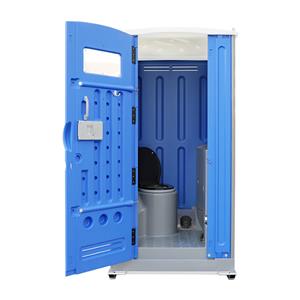
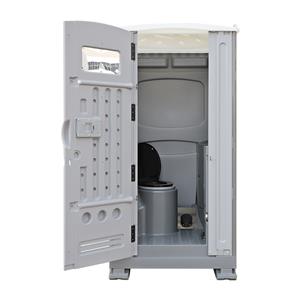
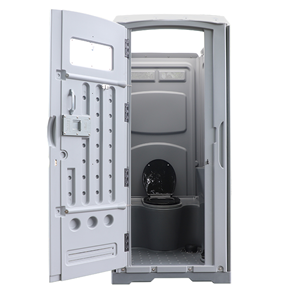
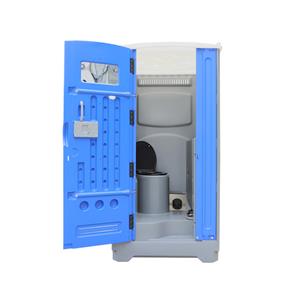
The TPT-H13's expansive interior—enabled by its 2218.5 mm length—allows comfortable maneuvering without external help.
Overcoming Entry Hurdles
Challenge: How do thresholds exclude people?Even 50mm lips snag wheels, turning access into a struggle.
890 mm wide doors with 1900 mm height and zero-threshold floors in these wheelchair portable toilets permit smooth roll-in on prepared surfaces.
Securing Safe Transfers
Challenge: What happens without proper supports?Unstable surfaces heighten fall risks during seat shifts.
While base models prioritize space, add-on reinforced elements and the 475 mm seat height align perfectly with standard wheelchair levels for confident transfers.
Battling Odors and Poor Airflow
Challenge: Why do units become unbearable quickly?Insufficient venting traps heat and smells.
Rotomolded designs incorporate strategic vents, and impermeable surfaces wipe clean instantly, keeping outdoor mobile toilets fresh longer.
Managing Placement Practicalities
Challenge: How does terrain affect usability?Uneven ground tilts units or blocks paths post-setup.
Balanced weighting and optional lifting rods enable precise repositioning, ensuring doors remain accessible.
Smart Procurement Priorities
Standout units combine compliance, operational efficiency, and branding potential.
The Case for Rotomolded HDPE
One-piece construction eliminates seams that leak or harbor bacteria. Benefits include:
Drop-tested resilience for transport and site knocks
Built-in UV blockers preserving appearance indefinitely
Under-160 kg weights slashing ocean freight
Closed-loop recyclability for ESG reporting
Toppla's virgin-grade material outperforms blended alternatives in crack resistance and hygiene retention.
Accessibility That Goes Beyond Minimums
Target:
Clear 890 mm+ door paths with sturdy latches
475 mm fixtures matching transfer ergonomics
Roof rod options for mechanical moves
Modular mounts ready for dispensers or lighting
These details future-proof inventory against tightening codes.
Choosing the Right Variant
Non-flush/recycle (145 kg, 163 L tank): Cost-effective for volume deployments
Flush-with-sink (160 kg, dual tanks): Premium hygiene for events or public sites
Uniform external dimensions simplify fleet management across types.
Unlocking OEM Potential
Toppla enables molded-in colors, logos, and bundled accessories—perfect for creating exclusive lines with modest minimums that command higher wholesale pricing.
Benchmark Specs Driving Performance
Toppla TPT-H13 data sets reliable standards for HDPE disabled portable toilets:
Dimensional Precision
External: 2218.5 × 1707 × 2297.5 mm—generous yet container-friendly
Door: 890 × 1900 mm clear opening
Seat: Fixed at 475 mm for optimal ergonomics
Capacity Breakdowns
Standard waste: 163 L across all
Flush addition: 43 L fresh + 139 L gray
Weight range: 145 kg (base) to 160 kg (flush)
Engineering Standouts
Seamless rotomolding for uniform strength
Optional solar-powered illumination
Roof-mounted lifting points on select configs
These figures translate to extended service cycles and lower total ownership costs.
Guidelines for Market Fit
Seek alignment with seat heights around 475 mm, door clearances exceeding 850 mm, and tank volumes supporting 200+ uses—benchmarks that satisfy most global accessibility frameworks.
Costly Sourcing Missteps to Avoid
Chasing Rock-Bottom Pricing
Sub-par plastics crack under UV or impact, triggering replacements and damaging supplier relationships.
Treating All Units as Equal
"Accessible" labels vary wildly—always verify door widths and interior volumes against actual wheelchair dimensions.
Ignoring Nesting Efficiency
Poorly designed bases waste 20-30% of container space, inflating import duties.
Skipping Variant Planning
Single-model stockpiles miss opportunities in flush-preferred municipal or event segments.
Bypassing Supplier Depth
Opt for manufacturers offering genuine spare parts and engineering support to handle post-sale queries smoothly.
Looking Ahead
The wheelchair portable toilet landscape in 2026 rewards those who prioritize precision engineering, variant flexibility, and user-focused details. Toppla's TPT-H13 lineup—spanning non-flush reliability, flush sophistication, and recycle sustainability—equips B2B professionals to capture growing demand across portable toilets for events, construction zones, parks, and beyond.
By sourcing robust HDPE disabled portable toilets and outdoor mobile toilets built for independence and endurance, you position your operation as a trusted partner in inclusive infrastructure.
Product FAQs
1. What are the exact dimensions of the TPT-H13 wheelchair portable toilet?
All variants measure 2218.5 × 1707 × 2297.5 mm externally, with an 890 × 1900 mm door opening for easy wheelchair access.
2. How do the flush and non-flush models differ?
The flush version adds a sink, 43 L clean water tank, and separate 139 L wastewater stream for superior hygiene, weighing 160 kg versus 145 kg for non-flush.
3. What optional accessories can enhance these units?
Popular additions include soap dispensers, paper holders, solar lights for off-grid use, and four roof lifting rods for crane handling.
4. Why choose the recycle variant for certain projects?
It maintains identical 163 L capacity and accessibility while supporting environmental goals through material recovery alignment.
5. How does the 475 mm seat height benefit users?
This precise height matches standard wheelchair seats, enabling safer, more independent transfers without additional aids.